![High-contrast black and white typographic portrait poster of [Humanoid male robot], shown in side pr](https://images.meigen.ai/cdn-cgi/image/format=auto,quality=85,width=640,fit=scale-down/generations/2026-06/community_2857c0de-b544-43f9-9402-a68d858148a5.png)
![9:16 竖版实验赛车海报,以[Character Name]为主体,将角色设计为成年真人 COS 赛车驾驶员。完整保留角色原有的发型、配色、瞳色、饰品、能力符号与服装识别特征,将服装重新设计为贴身赛](https://images.meigen.ai/cdn-cgi/image/format=auto,quality=85,width=640,fit=scale-down/tweets/2084571107408175374/0.jpg)
Back to GalleryGPT Image
Prompt
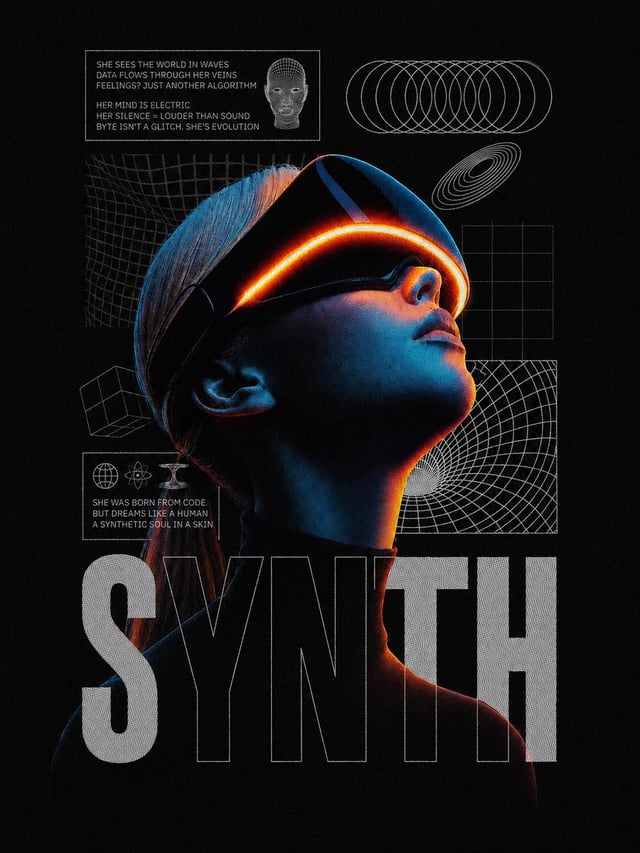
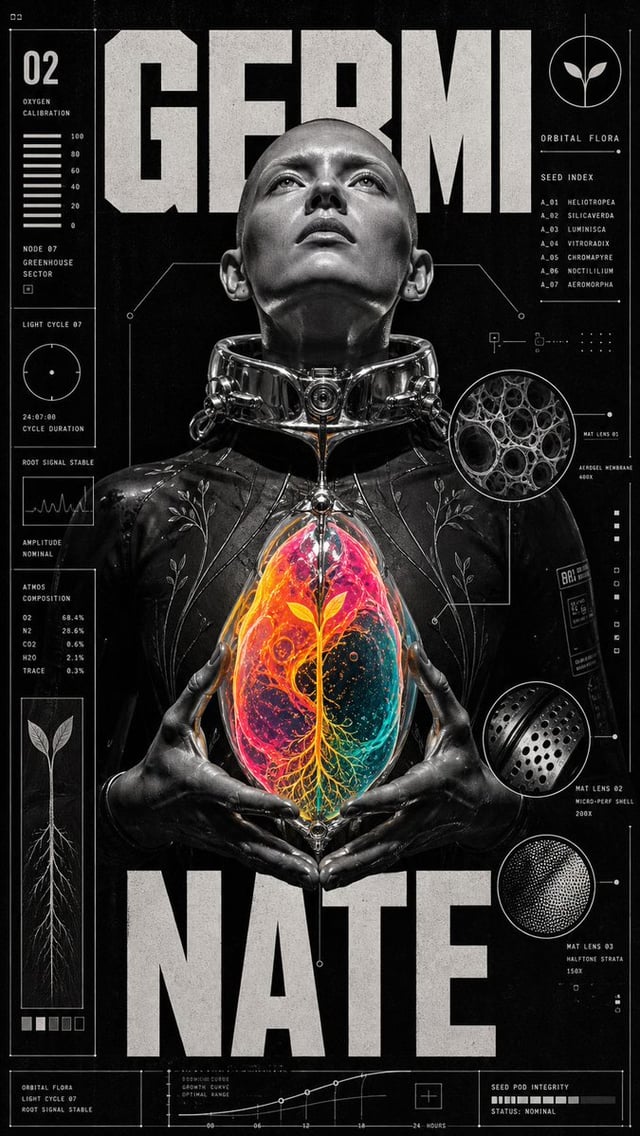
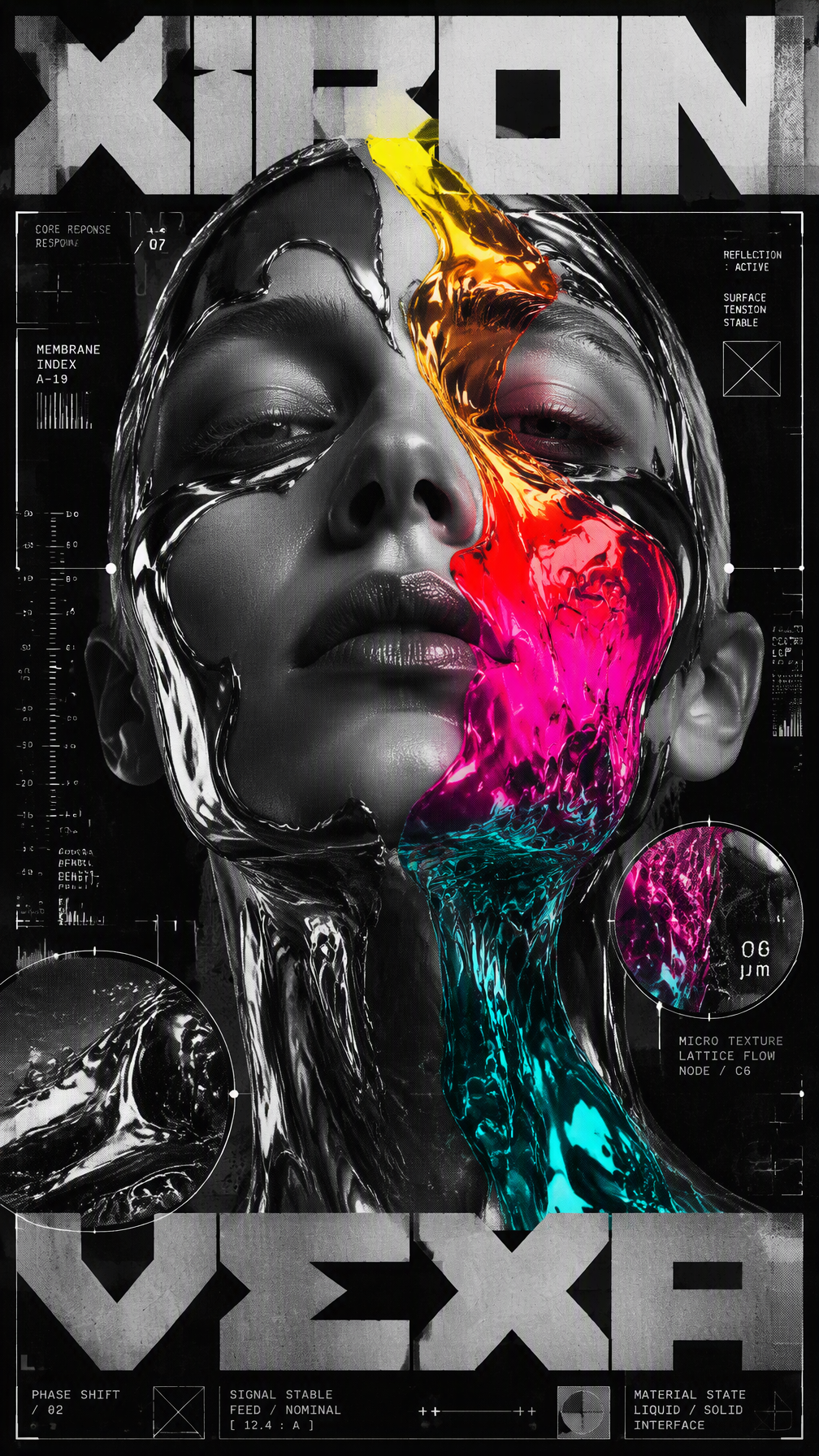
NEON LIQUID INTERFACE DOSSIER — ultra-photorealistic experimental editorial technology dossier, vertical 9:16 composition. Create a highly art-directed monochrome experimental poster built around ONE monumental central hero. The composition must feel like a premium printed technology dossier, combining realistic photography, liquid-metal material design, oversized geometric typography and technical inspection graphics. SUBJECT: [Specialist] The central subject is a monumental near-symmetrical frontal portrait, cropped dramatically by the frame. The anatomy remains photorealistic and believable, but parts of the body are seamlessly fused with smooth reflective liquid-metal shells. The material behaves like polished chrome and viscous molten metal: physically believable reflections, smooth curved surfaces, dark pooled edges, microscopic imperfections and crisp specular highlights. The subject should feel surreal but materially realistic — not a creature, robot or game character. MATERIAL EVENT: [Color Object] A single continuous neon-liquid membrane flows across the central hero. It must remain compact and visually unified rather than spreading throughout the composition. The neon material transitions gradually through molten yellow, signal orange, hot coral, electric pink, spectral cyan and deep teal, but the color should remain concentrated inside ONE continuous fluid structure. Use glossy specular reflections, translucent edges, darker pooled cavities and subtle internal luminosity. The neon core should look like illuminated liquid metal rather than ordinary neon lighting. COMPOSITION: One monumental hero dominates the center. The subject is cropped by the frame and occupies most of the vertical composition. The outer fifths of the poster remain relatively dark and minimal, containing narrow diagnostic data columns, small labels and technical graphic elements. Large oversized extra-wide geometric uppercase typography spans across the top and lower thirds of the composition. Main display word: [Main Text] The word must be invented/original and non-branded. Use huge ultra-bold squared geometric uppercase letters, extremely wide proportions, tight spacing and slight photocopy bloom. The typography behaves like architectural structure, partially disappearing behind and in front of the subject. Do not make the typography look like a normal caption. INSPECTION LENSES: Add 2–3 circular inspection lenses at distinctly different scales. Each lens magnifies a different material detail: [Lens Subjects] One lens must be partially cropped by the edge of the frame. The lenses should reveal extreme macro details such as liquid-metal reflections, microscopic surface texture, halftone dots, reflective shells or neon membrane structures. Use thin circular borders and subtle technical markings. INTERFACE GRAPHICS: Add thin white and charcoal interface lines routed exclusively through precise 90-degree angles. Lines terminate in small solid circular nodes. Add: - bracket frames - tiny measurement indicators - compact status panels - minimal bar graphs - short diagnostic labels - small registration marks - tiny geometric symbols - measurement ladder: [Measurement Ladder] - accent glyph: [Accent Glyph] The graphics must feel like fictional scientific inspection data, not a real software interface. MICROCOPY: Use narrow monospaced uppercase typography, generously tracked, arranged in very short lines. All text must be original, brief, fictional and non-scannable. Example visual language: “CORE RESPONSE / 07” “MEMBRANE INDEX” “OPTICAL DENSITY” “STRUCTURAL LOAD” “REFLECTION: ACTIVE” “PHASE SHIFT / 02” “SURFACE TENSION” “SIGNAL STABLE” Do not use recognizable brands, usernames, URLs or real-world interface elements. COLOR SYSTEM: Approximately 85% of the image must remain: carbon black, graphite, silver-gray, paper white and monochrome grayscale. Approximately 15% should contain saturated neon color concentrated exclusively inside the continuous liquid material event. Dominant colors: #090B0D #24292E #A8ADB0 #EDF0EF Neon accents: #FFD52F #FF6B22 #FF3E56 #F32A8A #22D4D8 #075C66 The neon must NOT become a general color palette across the entire image. LIGHTING: Hard frontal sculptural lighting. Create: - crushed black shadows - blown pale highlights - sharp silver rim reflections - dark material cavities - intense specular highlights - luminous neon core No cinematic fog. No atmospheric haze. No warm natural sunlight. The lighting should feel clinical, controlled and almost laboratory-like. TEXTURE: Use coarse photocopy grain, halftone dots, subtle paper fibers, weathered print edges, imperfect ink coverage, slight registration errors and distressed monochrome texture. The photographic anatomy