




GalleryGPT Image
Prompt
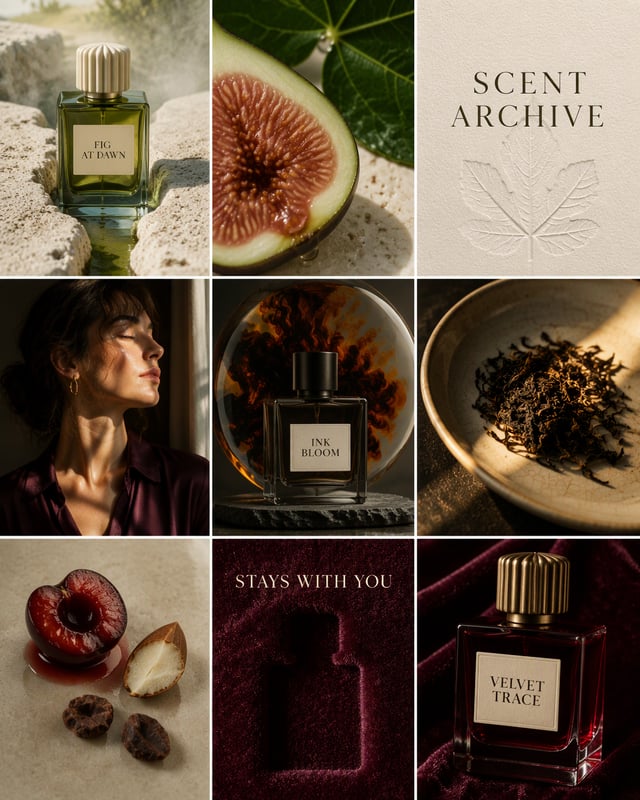
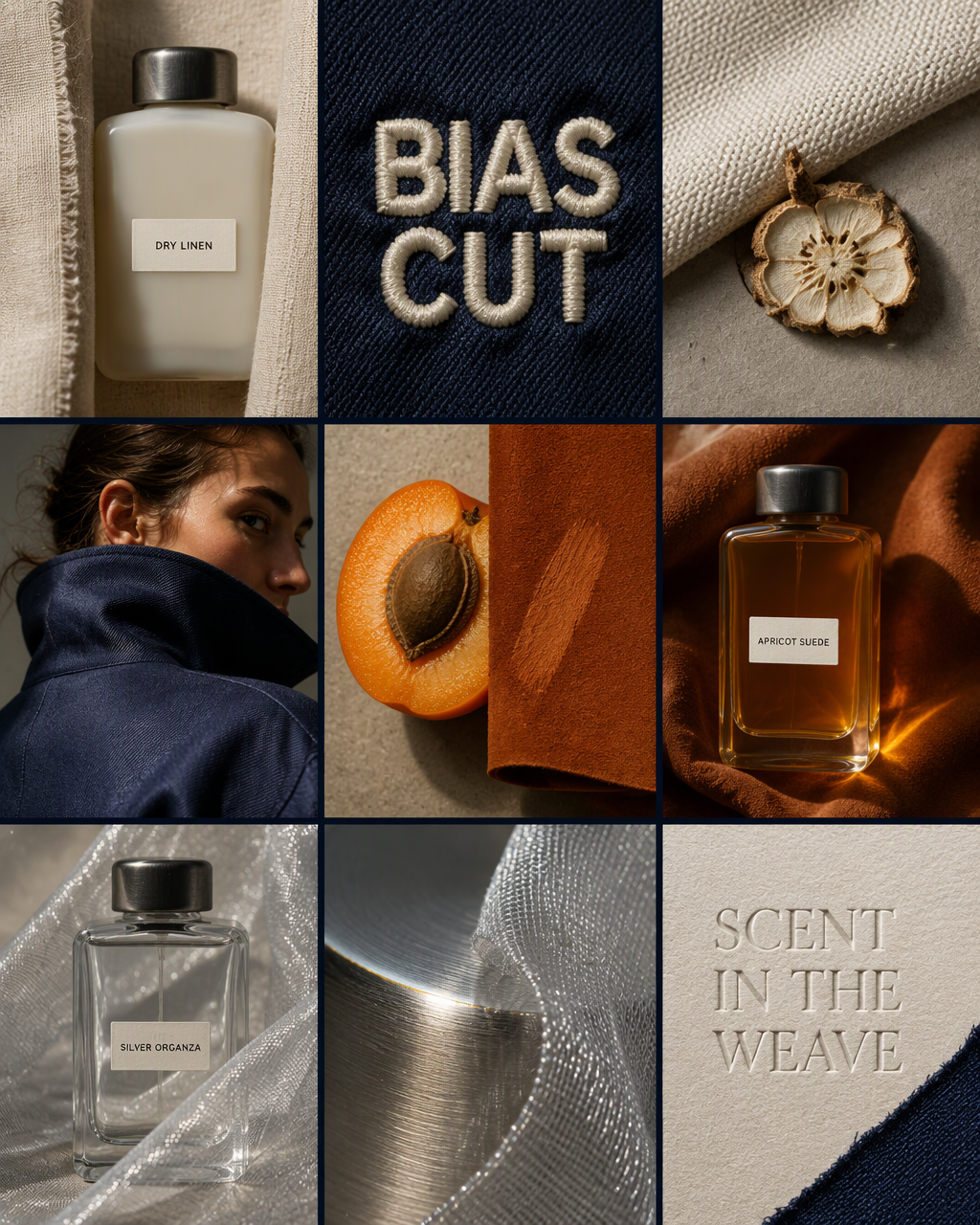
Create a single vertical 4:5 perfume campaign board for a fictional collection named BIAS CUT. Divide the image into exactly nine equal rectangular tiles in a precise 3×3 grid, with narrow ink-blue gutters. Give the campaign the tactile character of a fashion atelier. Alternate full product views, extreme textile macros, a portrait, and two typographic tiles. Keep all tiles in a fixed order, read from left to right.Use one shared bottle design throughout: a tall flat-sided rectangular glass body with gently rounded shoulders, a wide flat front for the label, and a short oval cap clad in dark brushed metal. DRY LINEN uses milky glass, APRICOT SUEDE uses transparent amber glass, and SILVER ORGANZA uses clear glass. Keep the bottle geometry consistent across all three shots. Set the fragrance names on small ivory labels in a crisp, narrow black sans serif.TOP ROWDRY LINEN. Photograph the milky bottle almost straight on, nestled between two folds of washed ecru linen. One fold runs close to the edge of the bottle, leaving the entire label visible. Use soft window light to show the dry weave, a naturally frayed thread, and a narrow seam shadow.Campaign title. Show indigo fabric from directly overhead. Embroider “BIAS CUT” in thick ivory thread using broad uppercase letterforms. Let the angled weave of the fabric run behind the lettering. Show individual stitches and a slight pucker where the embroidery pulls the cloth.Linen and orris. Shoot a macro view from fabric height. Place a thin cross-section of dried orris root at the boundary between folded ecru linen and cool gray paper. Show the pale chalky interior of the root against the crisscross weave of the fabric.MIDDLE ROWFashion portrait. Photograph an adult model from above and behind, turning their head just enough to reveal a cheekbone and the corner of one eye. An oversized ink-blue jacket with a sculptural collar fills most of the frame. Let side light reveal fine hair near the temple, natural skin texture, and diagonal threads in the fabric.Apricot and suede. Shoot a split apricot and a folded piece of rust-colored suede from directly overhead. Match the torn edge of the fruit to the clean-cut edge of the leather. Reveal moist flesh, the rough apricot stone, and a single fingertip streak where the suede nap changes direction.APRICOT SUEDE. Place the amber bottle on a folded copper-brown suede panel. Shoot from label height at a slight angle, with directional late-afternoon light passing through the glass base. Let the suede absorb the light around the glowing bottle. Keep the label in sharp focus.BOTTOM ROWSILVER ORGANZA. Photograph the clear bottle from a low three-quarter angle. Drape a single sheet of silver-gray organza across the foreground, forming a diagonal opening that reveals the label and the front edge of the glass. Backlight the threads so they shimmer along the fold. Keep the cloth visibly separate from the bottle.Silver texture. Photograph the edge of organza at extreme macro scale as it curls around the corner of a brushed metal sheet. Show individual crossed threads, faint machining lines in the metal, and one clean highlight along the curve.Campaign line. Letterpress “SCENT IN THE WEAVE” onto thick ivory paper in an elegant italic serif. Crop a real strip of dark-blue fabric into one corner. Use raking light to reveal the shallow impression of the lettering and the rough cut edge of the cloth.Render only “BIAS CUT”, “DRY LINEN”, “APRICOT SUEDE”, “SILVER ORGANZA”, and “SCENT IN THE WEAVE”, with exact spelling. Keep the visual scale varied and all text readable. Exclude outer frames, tile numbers, decorative graphics, extra text, and watermarks.