



Back to Galleryother

172.3KOct 26, 2026
Prompt
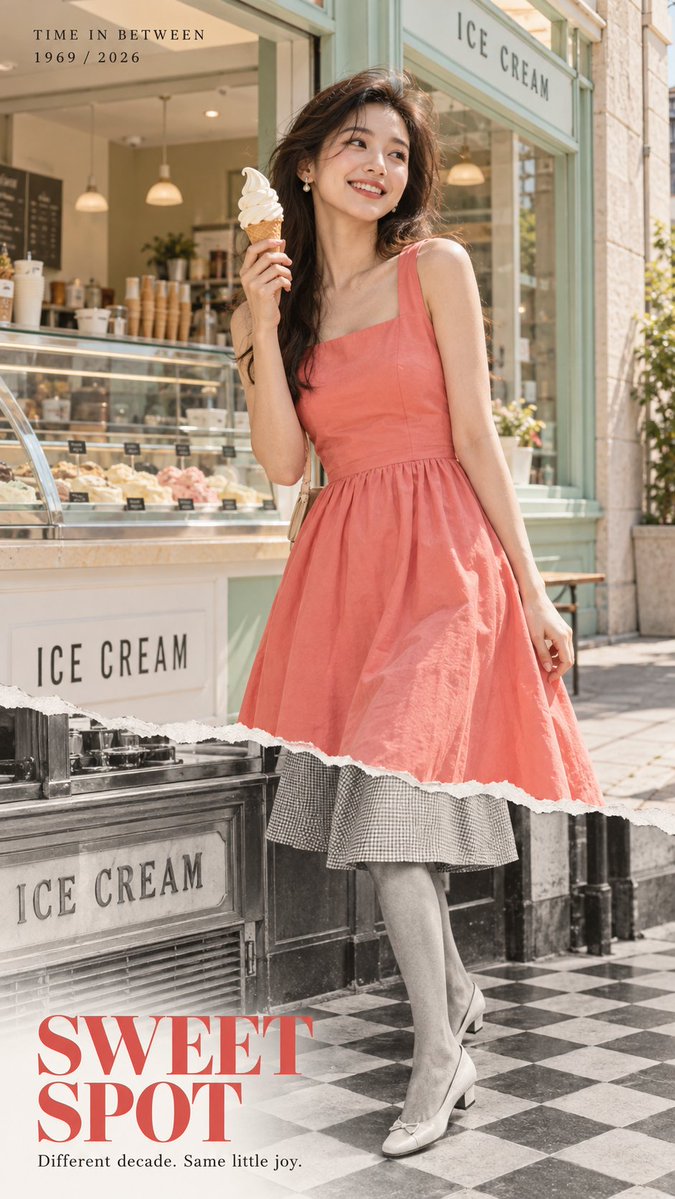
[Subject]: [Subject] [Modern Outfit]: [Modern Outfit] [Past Outfit]: [Past Outfit] [Location]: [Location] [Past Year]: [Past Year] [Present Year]: [Present Year] [Modern Scene]: [Modern Scene] [Past Scene]: [Past Scene] [Key Prop]: [Key Prop] [Accent Color]: [Accent Color] [Title]: [Title] [Tagline]: [Tagline] [Aspect Ratio]: 9:16 Create a high-end 9:16 fashion editorial poster built around a single torn-paper time transition. The upper 65–70% of the image is one complete modern color photograph. Only the lower part is torn open, revealing the exact same location in [Past Year] as a black-and-white historical photograph. Do not add a second tear at the top. Make [Subject] the absolute visual focus, occupying roughly 70–80% of the frame. Use realistic skin texture, natural hair, believable anatomy, candid body language, and matte fabrics. Avoid oily skin, plastic AI faces, excessive retouching, CGI textures, and stiff model poses. Dress the subject in [Modern Outfit] and use [Accent Color] as the main visual color anchor. Show [Location] in [Present Year] using [Modern Scene]. Keep the environment realistic, contemporary, clean, and visually restrained. Below the single torn edge, reveal [Past Scene] in black-and-white, preserving the same camera angle, architecture, doorway positions, floor lines, horizon, and perspective so both eras clearly feel like the same place. Let the torn edge cross the subject around the thigh or knee. Below it, transition the same person into [Past Outfit] while keeping exactly the same body position, proportions, leg direction, and weight distribution. If useful, let [Key Prop] also change into its historical equivalent while keeping its position and perspective aligned. The torn edge should look physically real, with fine white paper fibers, irregular handmade tearing, slight thickness, and a soft contact shadow. Keep the historical section clean and photographic, with subtle black-and-white film grain and natural grayscale. Avoid heavy scratches, stains, yellowing, distressed paper, glowing cracks, portals, floating fragments, or fantasy effects. Use natural daylight or believable indoor light. The modern section should feel clean, tactile, and editorial rather than overly cinematic or commercial. Keep the person sharper than the background, with realistic skin, fabric, object materials, and depth of field. Add restrained editorial typography: “TIME IN BETWEEN” with “[Past Year] / [Present Year]” near the top, then “[Title]” and “[Tagline]” in the lower historical area. Keep typography secondary to the person. Do not add random text, logos, watermarks, QR codes, or decorative symbols. The final visual hierarchy should be: first the person and outfit, then the single torn edge, then the discovery that the same person, object, and location continue into an earlier era underneath. Generate one complete standalone 9:16 poster, not a split-screen, grid, or before/after layout.