![Create a charming vertical 4:5 mid-century travel picture-book illustration of [Destination], inspir](https://images.meigen.ai/cdn-cgi/image/format=auto,quality=85,width=640,fit=scale-down/tweets/2086508308001865864/0.jpg)
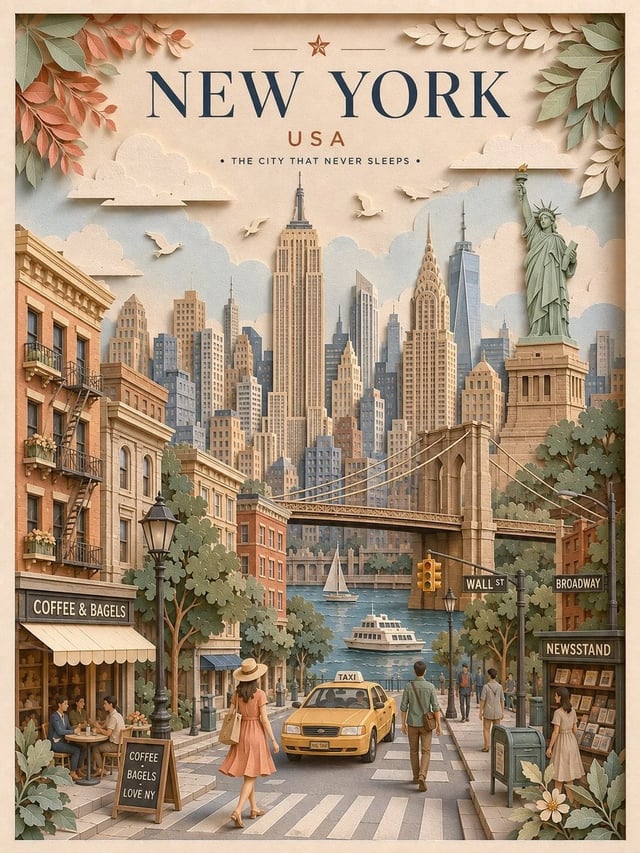
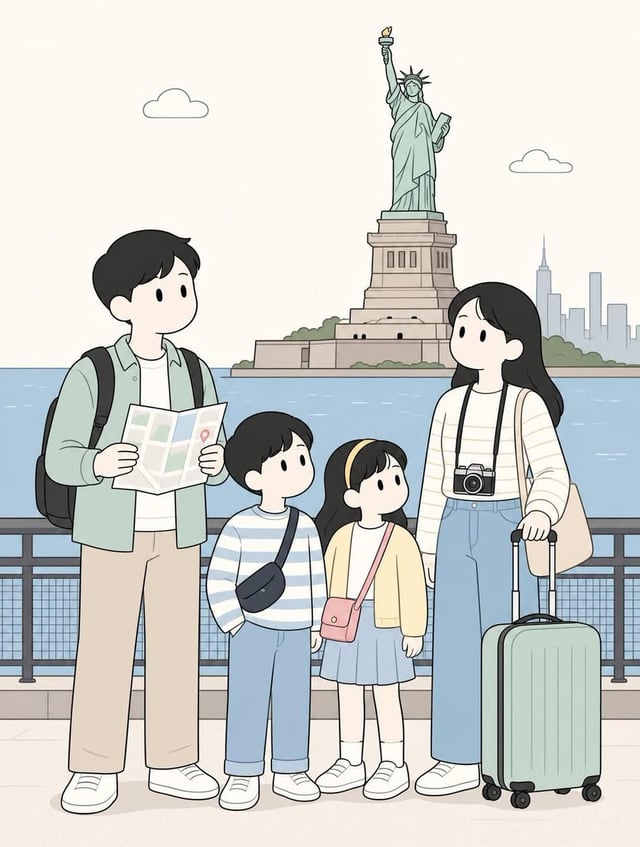
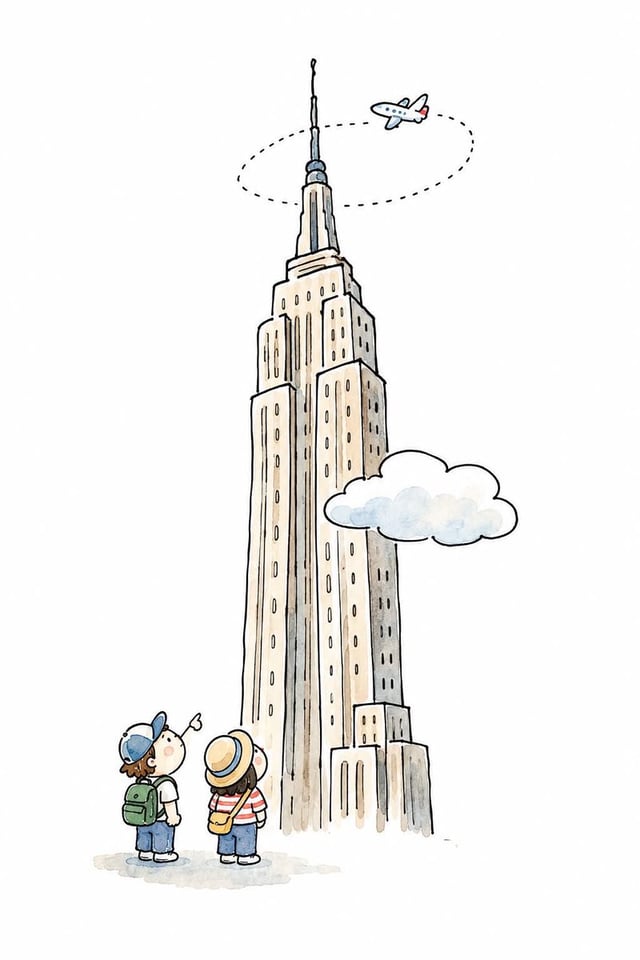
![Ultra-detailed layered papercut art illustration of [Country Or City], colorful paper craft design,](https://images.meigen.ai/cdn-cgi/image/format=auto,quality=85,width=640,fit=scale-down/tweets/2062510958401196205/0.jpg)
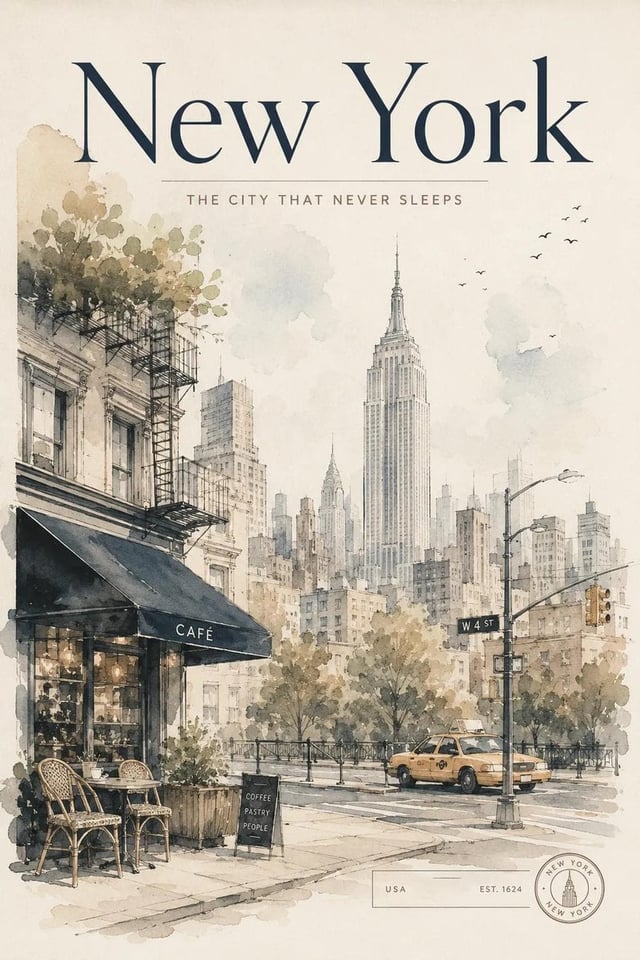
![Create a premium commercial-quality vertical 3:4 layered paper-cut collage illustration of [Country]](https://images.meigen.ai/cdn-cgi/image/format=auto,quality=85,width=640,fit=scale-down/tweets/2070884374904525180/0.jpg)
![A neat, colorful crayon and colored-pencil drawing of [CITY], featuring iconic landmarks, trees, and](https://images.meigen.ai/cdn-cgi/image/format=auto,quality=85,width=640,fit=scale-down/tweets/2008534095404691697/0.jpg)
![A monochrome architectural portrait of [City], rendered as a fine black ink sketch with expressive w](https://images.meigen.ai/cdn-cgi/image/format=auto,quality=85,width=640,fit=scale-down/tweets/2077870388676084113/0.jpg)
Back to GalleryGPT Image

481.4KJul 22, 2026
Prompt
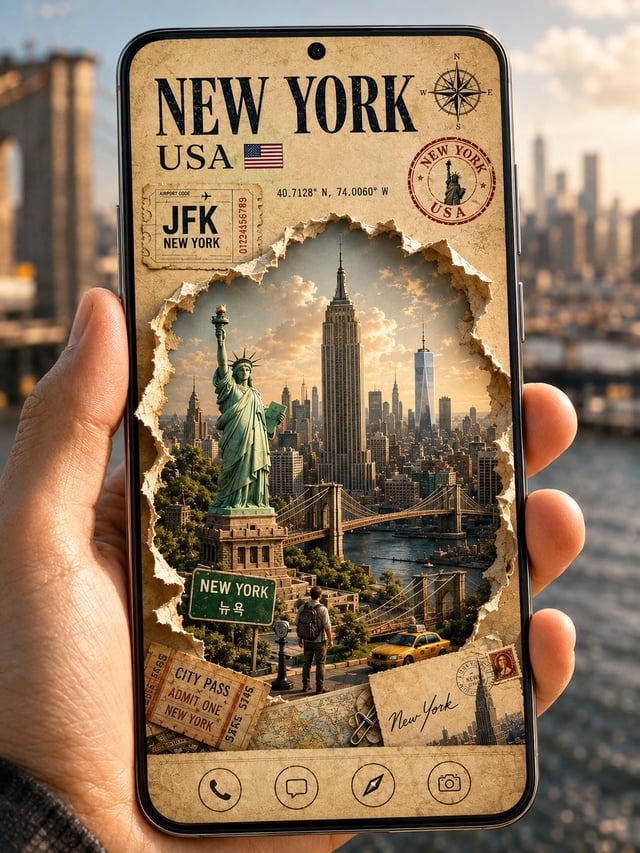
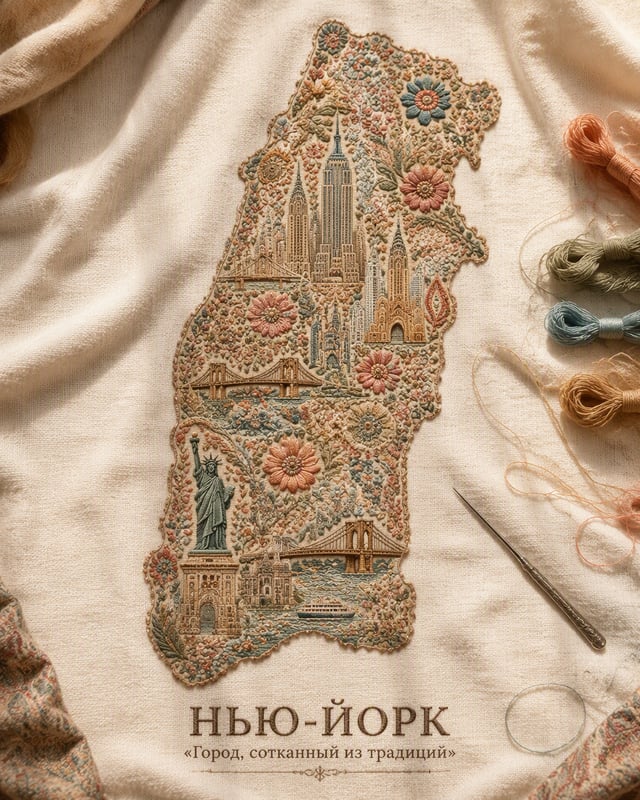
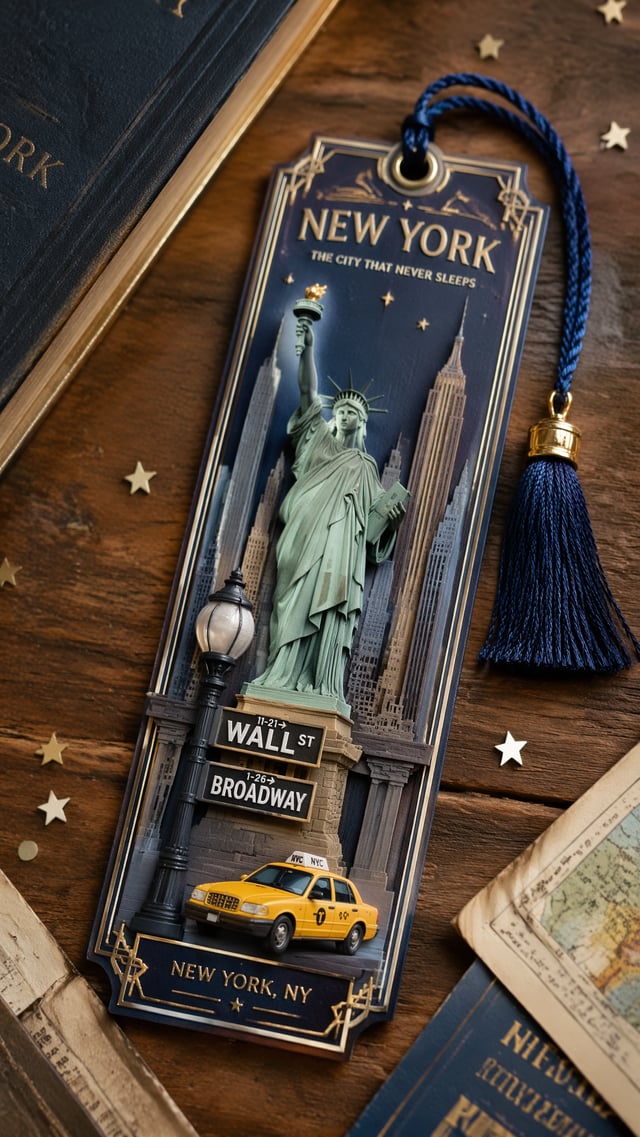
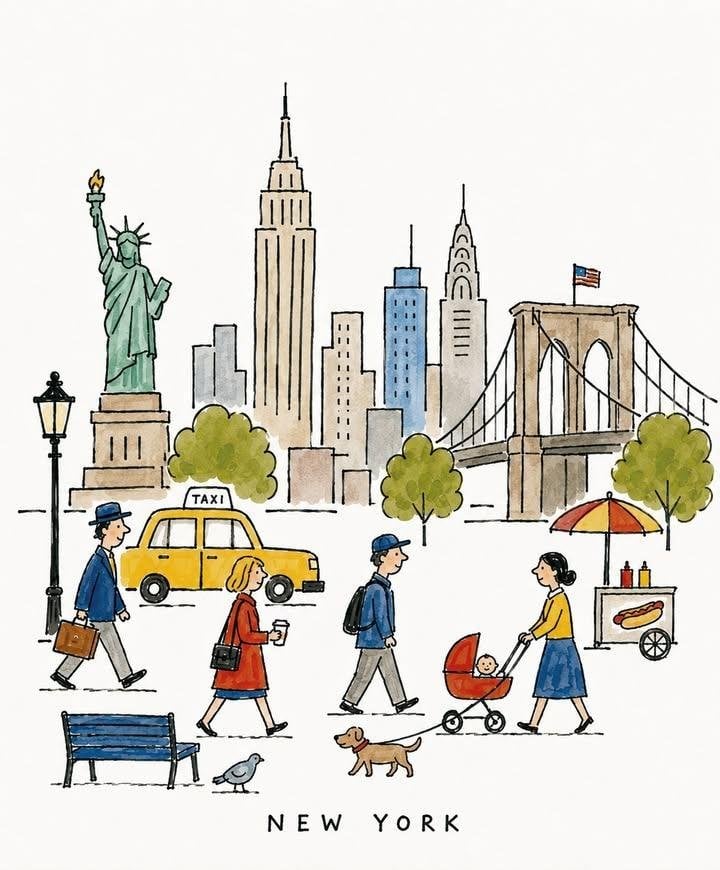
[Destination] = [New York] Create a charming vintage picture-book illustration of [Destination], resembling a simple city drawing made by an enthusiastic beginner illustrator in the 1960s or 1970s. The image should feel spontaneous, slightly clumsy, playful, and full of life. It must not look professionally polished, technically skilled, carefully rendered, or digitally perfected. DRAWING STYLE Draw everything with a small number of loose black ink strokes. Use simple, wobbly outlines, uneven pressure, hesitant curves, abruptly ending lines, crooked shapes, and occasional gaps in the contours. The artist should appear more interested in capturing the feeling of the scene than drawing anything correctly. Use very little internal detail. Do not carefully describe surfaces, materials, clothing folds, facial features, windows, bricks, roof tiles, or architectural ornament. The drawing should resemble a talented beginner’s sketch rather than the work of a highly trained illustrator. Forms may be awkward, proportions may be incorrect, perspective may be inconsistent, and objects may not align properly. Buildings can lean, windows can float or vary in size, roads can bend unnaturally, and people can have oversized heads, short arms, long legs, stiff hands, or slightly unbalanced poses. Preserve these mistakes instead of correcting them. Use fewer marks, fewer shapes, and fewer details than normally expected. Do not fill every area. Leave large parts of the white paper untouched. Every object should be communicated with the minimum number of strokes possible. BACKGROUND Use a bright, clean museum-white paper background with only a faint natural paper grain. Keep the surface fresh and spacious. No cream background, yellow tint, beige cast, sepia tone, dirty paper, stained edges, distressed texture, or artificial aging. COMPOSITION Show one simple eye-level street scene in [Destination]. Loosely combine 2–3 famous landmarks into the background as simplified, slightly inaccurate silhouettes. The landmarks only need to be recognizable through their most basic shapes. Do not reproduce their architecture accurately and do not add ornamental detail. They should look as though the illustrator drew them quickly from memory. Place the landmarks close together in an imaginary compressed neighborhood rather than an accurate city map. Use only a few simple buildings, one loose street or path, several trees, and a small amount of street furniture. Keep the composition open, flat, and slightly awkward, with generous white space. Avoid deep perspective, grand cinematic viewpoints, symmetrical framing, complicated streets, dense architecture, and carefully layered scenery. PEOPLE Include approximately 5–6 simple figures in the foreground and midground. Each person should be captured with only a few lines and one clear gesture. Show ordinary actions such as walking, talking, carrying a bag, holding flowers, pushing a stroller, walking a dog, reading, or playing. Do not give every figure a separate elaborate story or detailed clothing. Faces should be extremely simple, using only a dot, short line, or tiny curved mark for the eyes, nose, and mouth. Avoid realistic anatomy, carefully drawn hands, expressive portrait faces, fashionable styling, detailed hair, fabric folds, or complex poses. Let the figures appear slightly stiff, crooked, oddly proportioned, and charmingly amateurish. They should feel lively because of their gestures and directions, not because of detailed rendering. LANDMARKS AND STREET DETAILS Choose only 2–3 unmistakable landmarks from [Destination] and reduce each one to its simplest visual symbol. Draw them with uneven outlines, simplified shapes, missing details, and inaccurate proportions. Do not attempt architectural precision. Add only 3–5 small local details in total, such as one street lamp, one bench, one bicycle, one tree, one local vehicle, one flower stand, or one dog.